


 305-204-5000
 CALL US NOW
 EMAIL US NOW

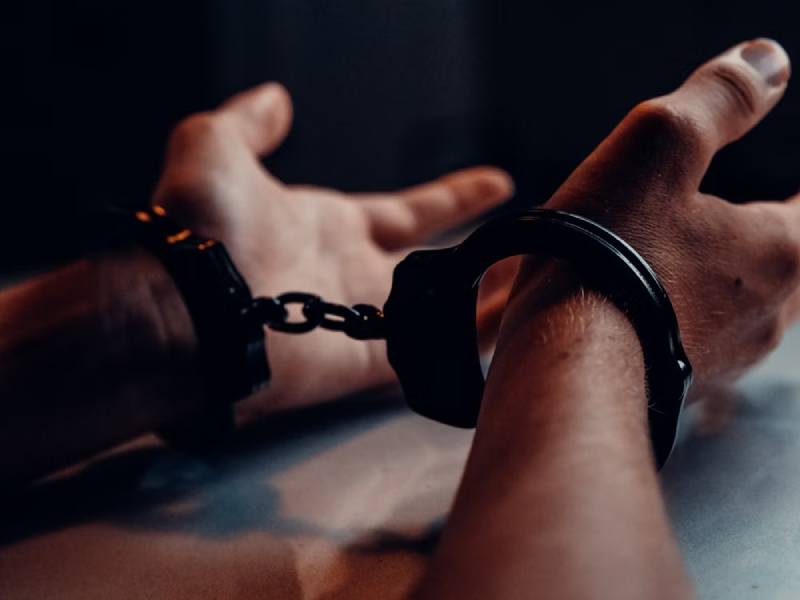
A domestic violence arrest in Florida can upend your life in hours. You may lose access to your home, your children, and your freedom — often before a judge has heard a single word of your side. If you or someone you love has been charged with domestic violence in Miami-Dade, Broward, or Palm Beach County, here is what you need to know.
What Counts as “Domestic Violence” Under Florida Law?
Florida Statute § 741.28 defines domestic violence as any assault, aggravated assault, battery, aggravated battery, sexual assault, sexual battery, stalking, aggravated stalking, kidnapping, false imprisonment, or any other criminal offense resulting in physical injury or death — committed by one family or household member against another.
“Family or household members” include:
- Current or former spouses
- Persons related by blood or marriage
- Persons who live together as a family or have done so in the past
- Persons who share a child in common (whether or not they have ever lived together)
Critically, Florida has no minimum force threshold. Even offensive touching — a grab, a shove, or slamming a door in someone’s face — can result in a domestic violence battery arrest.
Florida’s Mandatory Arrest Law: Why DV Is Different
Florida is a mandatory arrest state for domestic violence (§ 901.15(7), Fla. Stat.). When law enforcement responds to a DV call and finds probable cause that a battery has occurred, they must arrest someone — even if the alleged victim says nothing happened, recants, or begs the officer not to make an arrest.
This means:
- The alleged victim cannot “drop” the charges. Only the State Attorney’s Office can decide whether to prosecute. Many clients are stunned to learn their partner’s request that charges be dropped has no legal effect on the case.
- You will be held without bail until first appearance. Under § 741.2901, DV arrestees must appear before a judge before bond is set — typically within 24 hours.
- A mandatory no-contact order will issue immediately. This means you cannot contact the alleged victim by phone, text, email, or social media — and cannot return to your shared home — even before you’ve been convicted of anything.
Common Domestic Violence Charges in Florida
Domestic Battery (F.S. § 784.03)
The most common DV charge. A misdemeanor of the first degree (up to 1 year in jail, 12 months probation, $1,000 fine). Even a first offense typically results in the State pushing for a batterers’ intervention program (BIP) and supervised probation.
Aggravated Battery (F.S. § 784.045)
If serious bodily injury occurred or a weapon was used, the charge elevates to a second-degree felony (up to 15 years in state prison). This is the charge we see when an injury requires medical attention or when any object is used.
Domestic Assault (F.S. § 784.011)
Threatening language or an act that puts someone in reasonable fear of imminent violence — even without physical contact. A second-degree misdemeanor unless aggravated.
Stalking / Aggravated Stalking (F.S. § 784.048)
Willfully following, harassing, or cyberstalking a family or household member. Can be a misdemeanor (simple stalking) or a third-degree felony (aggravated stalking — with credible threats). These charges are increasingly common in post-separation situations where one party monitors the other’s location or social media.
Felony Domestic Battery by Strangulation (F.S. § 784.041(2))
Intentionally impeding normal breathing or circulation by applying pressure to the throat or neck. A third-degree felony — even on a first offense with no visible injury. This charge carries up to 5 years in prison and cannot be sealed or expunged.
Penalties for Domestic Violence Convictions in Florida
Florida imposes significant mandatory consequences beyond standard sentencing:
| Charge | Classification | Max Prison | Key Mandatory Penalties |
|---|---|---|---|
| Domestic Battery (1st offense) | M1 | 1 year | 12 months probation, 26-week BIP |
| Domestic Battery (2nd+ offense) | M1/F3 | 5 years | Mandatory jail (10 days min. if adjudicated) |
| Aggravated Battery (DV) | F2 | 15 years | 10-year min. if serious injury |
| Battery by Strangulation | F3 | 5 years | Cannot be expunged |
| Aggravated Stalking | F3 | 5 years | Probation + injunction |
Additional consequences beyond the sentence include:
- Mandatory loss of firearms rights — any DV conviction (misdemeanor or felony) permanently bars you from possessing a firearm under both Florida and federal law (Lautenberg Amendment)
- No expungement or sealing — DV convictions cannot be sealed or expunged in Florida under § 943.0585
- Impact on custody and immigration — DV adjudications are heavily weighted in family court and can affect immigration status
- Batterers’ Intervention Program — 26-week mandatory program (minimum) on most DV probation sentences
- Loss of professional licenses — healthcare workers, teachers, law enforcement, and other licensed professionals face separate licensing consequences
What Happens After a Domestic Violence Arrest in Miami-Dade?
Here is the typical sequence of events:
- Arrest — Mandatory custody. No ability to post bond until first appearance.
- First Appearance (within 24 hrs) — A judge reviews probable cause and sets bond conditions. A no-contact order issues immediately and often includes a “stay-away” provision from the shared residence.
- Filing Decision — The State Attorney’s Office reviews the case and decides whether to file formal charges, file reduced charges, or no-file. In Miami-Dade, a dedicated DV unit handles these decisions.
- Arraignment — If charges are filed, the defendant enters a plea. Always plead not guilty at this stage — changing to a plea deal later is always possible; the reverse is not.
- Pre-trial / Motion Practice — Defense investigation, depositions, motions to suppress, and motion hearings. This is where DV cases are often won.
- Resolution — Through plea negotiation or trial.
Can the Charges Be Dropped If the Victim Doesn’t Want to Prosecute?
This is the most common question we receive from domestic violence clients.
Short answer: Not automatically — but victim non-cooperation is the most powerful factor in a DV defense.
Florida prosecutors are trained to pursue DV cases even without a cooperative victim (the “victimless prosecution” strategy). However, in practice, a recanting or non-cooperative alleged victim dramatically changes the calculus:
- Hearsay exceptions: The State may try to admit 911 calls and officer body cam statements under the excited utterance exception. A defense attorney can challenge admissibility.
- No independent corroboration: If the alleged victim recants and there are no other witnesses, no medical records, and no photos — the State’s case can collapse.
- Affidavit of non-prosecution (ANP/NPA): An alleged victim can provide a sworn statement explaining their desire not to prosecute. This is not binding on the State but is highly influential. Experienced DV defense attorneys know how to present ANPs effectively.
Common Defenses to Domestic Violence Charges in Florida
Every DV case is different. The defenses that apply depend on the specific facts. Here are the most common defenses used at Piotrowski Law:
Self-Defense / Defense of Others
Florida’s self-defense statute (§ 776.012) applies in DV cases. If the defendant was defending themselves or their children from an aggressor, self-defense is a complete defense. Stand Your Ground immunity (§ 776.032) may be available for pre-trial dismissal.
Mutual Combat
In many DV calls, both parties have acted physically. Florida law does not prevent the mutual combatant from asserting self-defense. Identifying who was the primary aggressor — and challenging the officer’s on-scene determination — is critical.
False Accusation / Fabrication
DV allegations arise frequently in the context of divorce, child custody disputes, or relationship breakups. Fabricated allegations are more common than prosecutors acknowledge. Text messages, social media posts, prior false reports, and motive evidence can be powerful tools in the defense.
Lack of Physical Evidence
Without photographs of injuries, medical records, or DNA evidence, the State’s case depends entirely on witness testimony. Challenging credibility — through prior inconsistent statements, depositions, and cross-examination — is often decisive.
Insufficient Evidence / No Probable Cause
The mandatory arrest requirement sometimes results in arrests where the evidence doesn’t support the charge. A motion to dismiss for lack of probable cause or a motion to suppress an unlawful arrest can end the case early.
Victim Recantation and Affidavit of Non-Prosecution
A non-cooperative victim with a detailed sworn affidavit of non-prosecution, combined with a clean social media record after the incident, is often enough to get a Miami-Dade or Broward DV case declined or no-filed.
Violation of a No-Contact Order
One of the most common ways DV defendants make their situations worse is by contacting the alleged victim in violation of the no-contact order.
Even if the alleged victim initiates contact. Even if they invite you home. Even if they tell you they’ve asked for the order to be lifted — contacting a protected party is a separate crime (§ 741.31, Fla. Stat.), punishable by up to 1 year in jail, regardless of who initiated the contact.
The only way to modify a no-contact order is through the court. Your attorney can file a motion to modify conditions of release. Until the judge signs an order lifting the no-contact order, do not make contact.
Why DV Cases Require Experienced Criminal Defense Counsel
Domestic violence cases in Florida move fast. No-contact orders issue immediately. The State files quickly. Prosecutors assigned to DV divisions are specialized. The consequences of a conviction — loss of firearms rights, no expungement ever, mandatory BIP, immigration impact — are permanent.
An experienced DV defense attorney can:
- Challenge the probable cause for arrest
- Move quickly to modify no-contact and “stay-away” conditions so you can return home
- Investigate the alleged victim’s credibility and motive
- Obtain surveillance footage, medical records, and cell phone records before they’re lost
- Coordinate with the alleged victim (through their own counsel if represented) to obtain an affidavit of non-prosecution
- Identify self-defense, Stand Your Ground, or other affirmative defense theories
- Navigate the difference between adjudication withheld (no conviction) and a guilty plea — which permanently affects your record
Frequently Asked Questions: Domestic Violence Charges in Florida
Can the victim drop domestic violence charges in Florida?
No. In Florida, only the State Attorney’s Office can drop charges — not the alleged victim. However, a non-cooperative victim significantly reduces the State’s ability to prove its case, and a sworn Affidavit of Non-Prosecution is a powerful tool.
Will I go to jail for a first-offense domestic battery in Florida?
Not automatically. A first-offense misdemeanor DV battery is often resolved through diversion, probation, or a deferred prosecution agreement — but this depends on the facts, the county, and your attorney’s negotiation. A conviction for a second offense carries a mandatory 10-day jail term.
Can I go home if I’m arrested for domestic violence in Florida?
Not until the court modifies your conditions of release. A no-contact and stay-away order issues at first appearance and prohibits you from returning to the shared residence until a judge lifts or modifies the order. Your attorney can file an emergency motion for modification.
Does a domestic violence conviction show up on a background check?
Yes, permanently. Domestic violence convictions in Florida cannot be expunged or sealed. They will appear on background checks indefinitely.
What’s the difference between a domestic violence injunction and criminal charges?
Criminal charges are filed by the State and can result in jail or prison. An injunction (restraining order) is a civil proceeding initiated by the alleged victim. Both can be pending simultaneously, and what happens in the injunction proceeding can affect the criminal case.
I was defending myself — can I still be charged with domestic violence?
Yes, you can be charged. But self-defense is a complete defense under Florida law. If the evidence supports it, your attorney can move for Stand Your Ground immunity before trial, which would result in dismissal without a jury ever hearing the case.
What if I’m not a U.S. citizen and I’m charged with domestic violence?
DV charges carry severe immigration consequences. Even a misdemeanor battery involving domestic violence is an “aggravated felony” equivalent under immigration law. Contact an attorney immediately — before entering any plea — so immigration consequences can be evaluated and addressed.
Contact a Miami Domestic Violence Defense Lawyer
If you’ve been charged with domestic violence in Miami-Dade, Broward, or Palm Beach County, contact Piotrowski Law for a free consultation. Chad Piotrowski is a criminal trial lawyer who has defended hundreds of DV cases throughout South Florida.
Call (305) 204-5000 — available 24/7.




 Open: 24 Hours

 Fax: 305.204.6000