


 305-204-5000
 CALL US NOW
 EMAIL US NOW

Being charged with a crime is one of the most frightening experiences that a suspect can have in Fort Lauderdale. It can be a DUI violation, a domestic violence offense, or a felony, but the immediate aftermath of an arrest is a wave of uncertainty. You have just been thrown into a world of complicated laws where the language is not familiar, the stakes are very high, and the outcome can forever change your life.
Here, information is your best asset. Knowing the future, and knowing in particular what to expect of the attorney who will represent you in the struggle to secure your freedom, can go a long way in lessening your anxiety.
The relationship between a criminal defense attorney in Fort Lauderdale and the client is not a one-time deal but the start of a strategic alliance. Florida has its own legal environment, with certain judges, prosecutors, and procedural peculiarities that an outsider cannot handle.
This guide discusses the steps of hiring and collaborating with a defense lawyer so that you are fully aware of what to expect at each stage of your case.
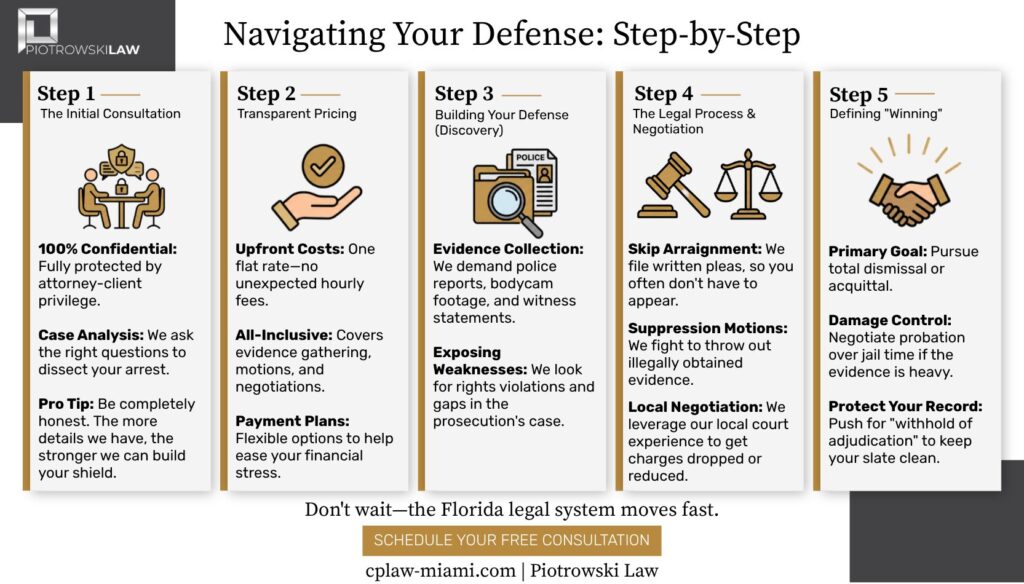
The Initial Consultation
The initial consultation is the first step towards your defense. It is the first time that many have ever talked to a lawyer. Nervousness is normal, but you are to see this meeting as an interview. You are hiring someone to handle the most critical issue in your life, and you must make sure you have the right person.
At this meeting, a good lawyer will begin deconstructing your case. They will pose investigative questions about the arrest, the police’s actions, and any evidence you know of.
Most importantly, this discussion is under the attorney-client privilege, even though you may not hire that particular attorney. It implies that you can be entirely frank.
Key Questions to Ask
- Local Experience: What is the frequency with which you deal with cases similar to mine?
- Strategy: What is your preliminary strategy, based on what I have just told you?
- Outcome Assessment: What are the best-case and worst-case scenarios?
Watch out for any lawyer who promises a particular outcome, such as a dismissal, at the initial encounter. An ethical lawyer will defend you, yet he or she cannot tell what will happen in the future without having the evidence.
Understanding Legal Fees and Payment Structures
The cost of legal representation is among the leading sources of stress for defendants. Honesty on charges is a characteristic of a reputable company.
Most criminal attorneys in Fort Lauderdale charge a flat fee rather than an hourly rate. This is usually beneficial to the client. Under a flat fee, you can be sure of the cost of the defense in advance, no matter how many phone calls you make or how many times your lawyer will be required to appear in court. This arrangement is consistent with your interests and those of your attorney: it is not to make more money by charging you an additional hour, but to get the case solved effectively and to your advantage.
What Is Typically Included?
The investigation, pretrial motions, court appearances, and negotiations with the State Attorney’s Office are generally included in a comprehensive fee. Trial fees, however, are usually distinct or tiered because a jury trial is far more work than a negotiated plea or dismissal.
There is nothing to be afraid of regarding payment plans. Numerous companies know that an arrest can be an unexpected financial crisis and offer flexible solutions to provide the best defense possible.
The Criminal Defense Process
After retaining a criminal justice attorney in Fort Lauderdale, the official legal procedure starts. Although each case is different, the overall course is quite predictable:
- Arraignment: This step involves the formal reading of charges. If you have employed the services of a lawyer, you are not always required to be present at this hearing; your counsel will submit a written plea of Not Guilty on your behalf.
- Discovery: This is the stage for gathering evidence. The prosecution must provide all the evidence they have against you, including police reports, bodycam footage, and witness statements. Your lawyer will review this material to identify weaknesses in the state’s case.
- Pre-Trial Motions: This is where a good lawyer comes in. Your attorney can make motions to suppress evidence because your rights have been infringed upon in the process of the stop or search, or motions to dismiss the charges altogether based on insufficient evidence.
- Negotiation: Your lawyer will negotiate with the prosecutor to find out the flaws in their case. This is the place of plea bargains, or of your lawyer persuading the state to dismiss the charges.
- Trial Preparation: If your team cannot resolve the case favorably, it is ready to go to trial. This is the process of picking a jury and defending yourself in an open court.
Communication and Case Updates
A successful attorney-client relationship is based on effective communication. But realistic expectations about contact are necessary.
Your lawyer wastes a lot of time in court, during depositions, or with the prosecutors. They might not be in a position to pick up the phone immediately when you call. However, there will always be a system that will keep you updated by a professional firm.
What to Expect
- Responsiveness: You would receive a call or email within 24-48 hours for non-emergency matters.
- Milestone Updates: You are supposed to be notified as soon as there is a significant development, such as a plea offer from the state or a decision on a motion.
- Your Part: You are an accomplice in this defense. In case of any change in your contact details or in case you discover new witnesses or evidence, you should inform your legal team at once.
Measuring Success
What does “winning” look like? The solution is different with each client.
Your defense lawyer will always strive to achieve the most favorable outcome, which is a dismissal or an acquittal (a not guilty verdict). However, success may be damage control. Negotiating a plea bargain that does not involve jail time, leaving a felony off your record (with a withhold of adjudication), or downgrading a charge to a lesser offense can be considered a win in a case where the evidence against a defendant is overwhelming.
The role of your attorney is to clarify these options so that you can make a good choice. They give you the legal plan and the risk analysis; you decide whether to take a deal or go to trial.
Conclusion
The choice of hiring a lawyer will affect your future, your freedom, and your family. You need a legal partner who is not only a good trial lawyer but also open, communicative, and willing to alleviate the stress of this trying time. You feel in control again when you know what to expect. The correct lawyer will lead you out of the darkness of the legal system and help you get out on the other side.
Piotrowski Law is the place to call in case of an arrest in Fort Lauderdale. We know how the Florida court system works. Book your appointment with us to discuss your case, learn your options, and begin developing your defense.
Featured Image Source: https://www.pexels.com/photo/close-up-view-of-a-text-on-a-paper-beside-a-gavel-6077448/






 Open: 24 Hours

 Fax: 305.204.6000